A UNESCO hanging valley that blooms in the monsoon
The Valley of Flowers is a national park at 3,350–3,650 m above Govindghat, open 1 June to 31 October and in full bloom from mid-July to late August. You trek about 10 km to Ghangaria, sleep there, and walk into the valley by day. Hemkund Sahib, at about 4,600 m, is a 6 km climb from the same base.
The Valley of Flowers is a glacial valley of the Pushpawati river, about 8 km long and 2 km wide, set high above the Badrinath road near Govindghat. It covers 87.5 km² of alpine meadow, scree and birch, ringed by peaks up to 6,719 m at Gauri Parbat. For most of the year it lies under snow. When the monsoon arrives, mist and rain feed an explosion of flowering plants, hundreds of species in all, many found only in this part of the Himalaya.
The valley was little known outside Garhwal until 1931, when the British mountaineers Frank Smythe, Eric Shipton and R. L. Holdsworth crossed into it on their way back from climbing Kamet. Smythe's book The Valley of Flowers made it famous. In 1939 the Kew botanist Lady Joan Margaret Legge died here while collecting plants; her grave lies in the valley. The area became a national park in 1982 and, with Nanda Devi National Park, a UNESCO World Heritage Site.
Every visit starts at Govindghat, where you take a shared taxi 4 km to Pulna and trek about 9–10 km up the Lakshman Ganga to Ghangaria at 3,049 m. The same trail carries Sikh pilgrims to Gurdwara Hemkund Sahib beside a glacial lake at about 4,600 m. No one may sleep in the park, so travellers stay three nights in Ghangaria: one for the valley, one for Hemkund and one spare for rain.
Say it like a local · Garhwali / HindiBrahma kamal
the sacred high-altitude flower Saussurea obvallata, Uttarakhand's state flower
What to do in Valley of Flowers & Hemkund
The valley in bloom
From mid-July to late August the meadows fill with flowers: balsam, potentilla, geraniums, primulas and, with luck, the blue poppy. June has early flowers and snow bridges; September turns golden. The park opens on 1 June and closes on 31 October; check current status before you travel.
Hemkund Sahib
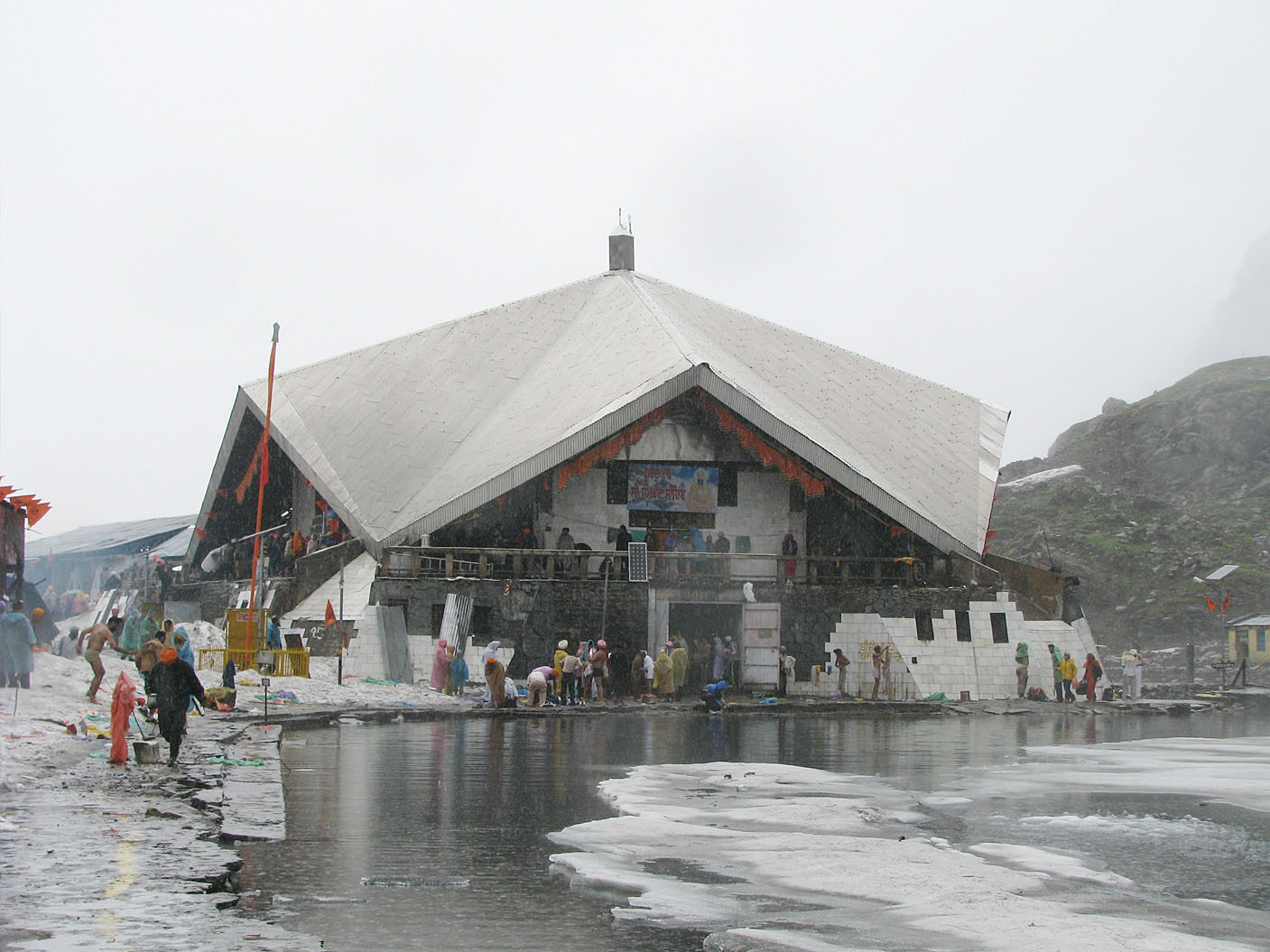
A gurdwara and the Lokpal Lakshman temple beside a glacial lake ringed by seven peaks, at about 4,600 m. It is a 6 km climb of about 1,100 m from Ghangaria on a stone path. The shrine is usually open from late May to early October.
Joan Legge's grave
About 5 km into the valley, a small stone memorial marks where the English botanist Joan Margaret Legge died in 1939 while collecting plants for Kew. Her sister built the memorial. A walk to it and back takes most of the day.
Brahma kamal at Hemkund
Around the Hemkund lake in August grows brahma kamal, Saussurea obvallata, a pale, cupped flower that is the state flower of Uttarakhand. It is sacred to pilgrims; please do not pick it.
Langar at the gurdwaras
The gurdwaras at Govindghat and Ghangaria serve free langar to anyone who comes, and offer simple shelter to pilgrims. Sit, eat what is served and wash your own plate if asked. A donation is welcome but never asked for.
Field notes
What most guides miss about Valley of Flowers & Hemkund
Sourced
In 1931 Frank Smythe, Eric Shipton and R. L. Holdsworth lost their way while returning from their successful expedition to Kamet and came upon the valley in flower. Smythe named it the Valley of Flowers and later wrote a book with that title.
Source: Valley of Flowers National Park
Sourced
Lady Joan Margaret Legge, sent by the Royal Botanic Gardens, Kew, slipped and died in the valley in 1939 while collecting flowers. Her sister built the memorial, and in 2010 a balsam found nearby was named Impatiens leggei in her honour.
Source: Lady Joan Legge
Sourced
Nanda Devi National Park was inscribed as a World Heritage Site in 1988, and the listing was extended in 2005 to include the Valley of Flowers as Nanda Devi and Valley of Flowers National Parks.
Source: UNESCO World Heritage Centre
Experiences
Three days worth having in Valley of Flowers & Hemkund
Valley of Flowers entry permit (3 days)≈ ₹150–200 Indians, ₹600–800 foreigners
Shared taxi, Govindghat to Pulna (4 km)₹50–100
Pony, Pulna to Ghangaria (one way)₹1,500–3,000
Helicopter seat, Govindghat to Ghangaria (one way)₹3,000–4,500 (indicative)
Room in Ghangaria lodge or GMVN rest house₹1,500–4,000 a night for a double
Porter for a day bag, Pulna to Ghangaria₹1,000–1,500
Local prices change with season and fuel costs. Check current status before you travel.
Getting there
How to reach Valley of Flowers & Hemkund
Bus
UTC and GMOU buses run from Rishikesh to Joshimath (about 265 km, 9–10 hours) and some continue to Govindghat and Badrinath. Shared jeeps link Joshimath and Govindghat (22 km).
Trek
From Govindghat, shared taxis cover the 4 km to Pulna. From there it is about 9–10 km on a stone-paved path to Ghangaria, climbing about 1,100 m; most walkers take 5–7 hours. Ponies and porters are available.
Helicopter
A helicopter shuttle runs between Govindghat and Ghangaria in good weather in the pilgrim season, a flight of a few minutes. Seats are limited and weather-dependent; check current status before you travel. A Govindghat–Hemkund ropeway has been approved but is not yet running.
Where to stay
Sleeping in Valley of Flowers & Hemkund
Saver: the GMVN tourist rest house at Ghangaria has rooms and dorm beds, and the gurdwara offers free shelter to pilgrims; private lodges charge ₹1,500–4,000 for a double with shared or attached bath. Hot water is often by the bucket. Comfort: Ghangaria has no hotels above simple mid-range; the best lodges have attached bathrooms and geysers, which we book for comfort trips. There is no signature-level stay; we place comfort-trip nights before and after at Joshimath or Auli.
Drawn by Himalaya Hives from Natural Earth outlines (public domain). Borders as depicted by India. Not for navigation.
Questions
Valley of Flowers & Hemkund, answered
How do I plan a Valley of Flowers trip from Delhi?
Reach Haridwar or Rishikesh overnight, take a bus or car to Joshimath (9–10 hours), then go to Govindghat next morning and trek to Ghangaria. Spend three nights at Ghangaria for the valley, Hemkund and a spare day, then return. A comfortable trip takes 7–8 nights from Rishikesh.
How much does a Valley of Flowers trip cost?
A saver trip of 6–7 nights from Rishikesh by bus, shared taxi and lodge rooms costs about ₹12,000–18,000 per person, including permits and simple meals. Ponies, porters or helicopter seats add more. A comfort trip by private car costs ₹35,000–50,000 per person for two sharing.
Is the Valley of Flowers safe in the monsoon?
The trail itself is well made, but the roads to Govindghat suffer landslides in July and August, and heavy rain can close paths for a day or two. Keep at least two buffer days, avoid driving after dark, take insurance and follow local alerts.
Do I need a guide for the Valley of Flowers?
No. The trail is clear and busy. A local guide, available at Ghangaria, helps you identify flowers and birds and knows where the best patches are that week. Guides are especially useful if you want to reach Joan Legge's grave and back in good time.
Is there mobile network at Ghangaria?
Network is limited. BSNL and sometimes Jio work patchily at Ghangaria; there is usually none in the valley itself. Tell family you will be out of contact for a few days, and carry cash, as there is no ATM above Joshimath on this route.
Will I get altitude sickness at Ghangaria or Hemkund?
Ghangaria at 3,049 m can bring headaches on the first night, and Hemkund at about 4,600 m carries a real risk of acute mountain sickness. Sleep at Joshimath before the trek, climb slowly, drink water and descend if symptoms worsen. Talk to your doctor before the trip.
Can children and seniors do the Valley of Flowers?
Many do, using ponies for the Ghangaria trek. The valley walk itself is moderate with some steep steps near the start. Hemkund is much harder because of altitude. Seniors should consult a doctor and plan extra rest days; children under 8 find the long days tiring.
What should I pack for the Valley of Flowers?
Waterproof jacket and trousers, waterproof trekking shoes, warm fleece, quick-dry clothes, a rain cover for your daypack, a torch, power bank, water bottle, sunscreen and basic medicines. Leave heavy luggage at Govindghat or Joshimath.
When does the Valley of Flowers open and close?
The national park usually opens on 1 June and closes on 31 October. The forest department announces dates each year and may close the trail on bad-weather days. Check current status before you travel.
Plan with a local planner
Plan Valley of Flowers & Hemkund into your trip
We reply within one working day with a route, a sleeping-altitude profile and an itemised price in your tier. Change anything. Pay nothing until you are sure.