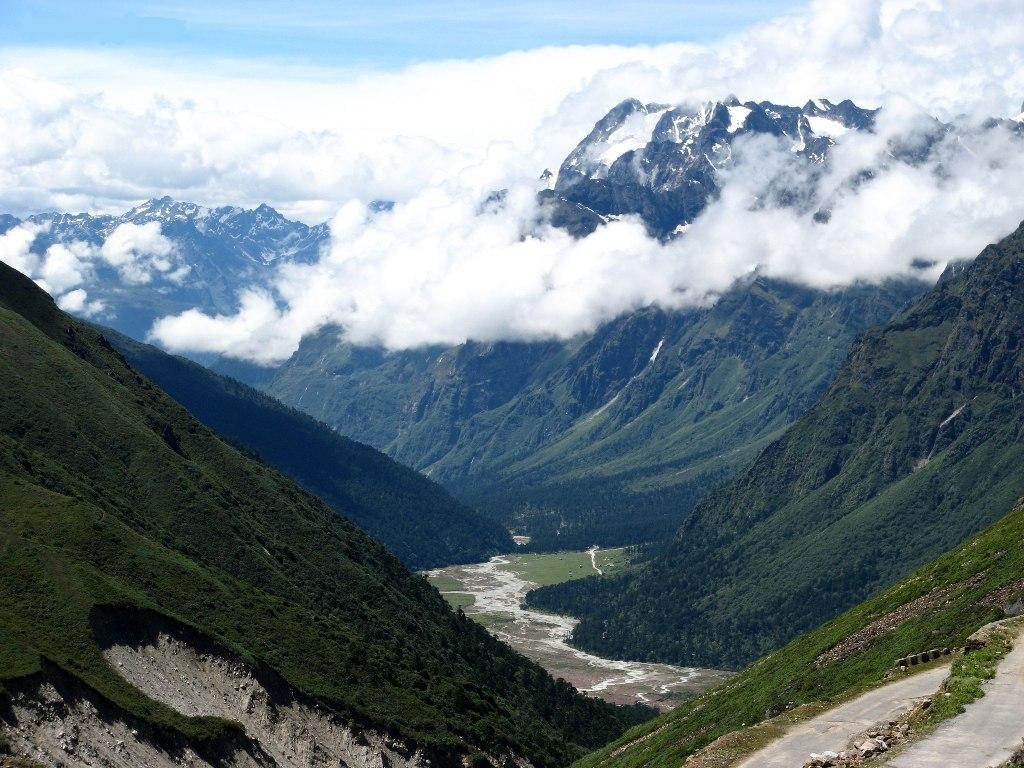
Sikkim's seasons in one view
Sikkim's weather is set by its height. The same week can bring 25 °C in Rangpo, a cool 12 °C in Gangtok, and snow at Yumthang. Three seasons matter: spring from March to May, the monsoon from June to September, and the clear autumn from October to December, with a cold winter in January and February.
Spring brings rhododendrons in Yumthang and the Maenam hills near Ravangla, usually in April and May. October and November give the sharpest mountain views. December to February is cold; Lachung, Yumthang and Tsomgo can be snowy, and high roads can close. The monsoon is wet and green, with landslides on NH10 and in the north.
For most first-time visitors, we suggest the two shoulder windows: late March to mid-May, and mid-October to early December. In both, roads are usually open, skies are clearer than in the monsoon, and hotels still have rooms at reasonable prices if you book a few weeks ahead. If you can only travel in the monsoon, choose the south and west, not the north, and keep long buffers.
| Months | What to expect | Best for |
|---|---|---|
| Jan–Feb | Cold; snow in Lachung, Yumthang, Tsomgo; roads can close | Snow, low prices |
| Mar–May | Mild; rhododendrons April–May; clearer mornings | Flowers, treks, first-time visits |
| Jun–Sep | Heavy rain; landslides; cloud on peaks | Green hills, low prices, carefully |
| Oct–Dec | Clear, dry, cool; sharpest mountain views | Kangchenjunga, photography, Gurudongmar |
Month by month in the north and the west
In North Sikkim, April to June and October to November are the usual windows for Gurudongmar and Yumthang. Winter freezes lakes and can shut the Gurudongmar road. In the west around Pelling and Yuksom, October to May is the main trekking and sightseeing season, with the Goecha La trek best in April–May and October–November.
In Gangtok and the south, almost any month works if you accept rain between June and September. Pelling is often clouded in monsoon, which hides Kangchenjunga but keeps the forests lush. The Zuluk Silk Route is a spring and autumn road; winter snow can block it, so check current status before you travel.
Winter is a different trip. From December to February, Gangtok is cool and dry, Pelling is cold and often clear at dawn, and Lachung and Yumthang can be buried in snow. Tsomgo Lake freezes, and the approach road is sometimes closed after snowfall. Many travellers love this season for photography, but you need warm clothing, flexible plans and a driver used to snow.


Altitude: where it matters
Altitude is the single biggest health risk on a Sikkim trip, and it is easy to underrate because the drives are short on the map. Gangtok is at about 1,650 m and Pelling at 2,150 m, which is fine for healthy travellers. Tsomgo Lake is at about 3,750 m, Yumthang at about 3,560 m, and Gurudongmar at over 5,100 m. Nathu La is above 4,300 m.
The risk is rapid ascent. Going from Gangtok to Tsomgo in two hours gains over 2,000 m, and headaches and nausea are common. Gurudongmar from Lachen gains about 2,400 m in a morning. Symptoms of altitude sickness can include headache, nausea, dizziness and poor sleep, and severe cases can be life-threatening. Talk to your doctor before you travel, especially with heart, lung or blood-pressure conditions.
| Place | Altitude | Where you sleep |
|---|---|---|
| Gangtok | ≈ 1,650 m | Usually here |
| Lachung and Lachen | ≈ 2,700–2,750 m | Overnight bases for the north |
| Zuluk | ≈ 3,000 m | Overnight base on the Silk Route |
| Yumthang Valley | ≈ 3,560 m | Day visit |
| Tsomgo Lake | ≈ 3,750 m | Day visit |
| Gurudongmar Lake | ≈ 5,100 m | Day visit from Lachen |
How to acclimatise sensibly
The basics are well known and dull. Climb slowly, sleep lower than your highest point, drink water, eat lightly, and avoid alcohol on arrival. For Gurudongmar, sleep a night in Lachen before the lake, leave very early, and spend no more than 30–45 minutes at the water. If symptoms worsen, descend; do not go higher.
We also advise not to plan Tsomgo and the Gurudongmar day back to back without a rest. Carry any medicines your doctor advises, and consider insurance that covers altitude evacuation. Children and older travellers should speak to their doctor before any day above 3,500 m.
Keep your itinerary simple above 3,500 m. One high day followed by a rest or a lower day is easier on the body than two in a row. If you are trekking from Yuksom towards Goecha La, a licensed operator will build acclimatisation days into the schedule; follow them even if you feel strong.
- Sleep a night at Lachen (2,750 m) before Gurudongmar.
- Leave early; weather turns by midday.
- Stay at the lake for no more than about 30–45 minutes.
- Do not ignore a headache that worsens; descend.
- Avoid alcohol and heavy meals before high days.
Permits: what you need and where it applies
As we understand the rules, foreign nationals need a free Restricted Area Permit to enter Sikkim, issued at Rangpo, Melli, Bagdogra Airport, by Sikkim Tourism offices and online. Protected Area Permits are needed for Tsomgo Lake and the Nathu La, North Sikkim, which means Lachung, Yumthang, Lachen and Gurudongmar, and the Zuluk Silk Route. Registered travel agents apply with your ID and photos.
Nathu La, Gurudongmar and Zuluk have been open to Indian nationals only on recent rules, and Nathu La opens only on certain days of the week. Treks into Khangchendzonga National Park from Yuksom need park and trekking permits arranged through a registered operator. All of this changes, so check current status before you travel and ask your agent to confirm in writing.
Roads, weather and a safe plan
Roads in Sikkim are narrow, steep and easily blocked. NH10 along the Teesta and the Mangan–Chungthang road in the north suffer landslides in the monsoon and sometimes in winter. We keep two buffer days before any flight, and we avoid driving at night.
Pack in layers: thermals, a fleece, a down jacket, a rain shell, gloves and a hat for the north, plus sunscreen and sunglasses, because the sun at height is strong. Carry cash and small notes, and tell someone your plan before you lose network above Chungthang.
A short packing and health list
A few items matter more in Sikkim than people expect. Carry thermals and a down jacket even in May if you are going north, because nights at Lachen and Lachung fall to a few degrees above freezing. A rain shell is useful in every month except mid-winter. Sunscreen, sunglasses and lip balm matter above 3,000 m, where the sun is strong and the air is dry.
Bring any regular medicines in their original packaging, plus basic first aid and motion-sickness tablets for the twisting roads. Ask your doctor whether altitude medicines are suitable for you; do not take them without advice. Travel insurance that covers high-altitude travel and evacuation is sensible for Gurudongmar and for any trek from Yuksom.
- Thermals, fleece and down jacket for the north
- Rain shell and sturdy shoes
- Sunscreen, sunglasses, hat and lip balm
- Water bottle, cloth bag and basic first aid
- Original ID, passport photos and permit copies
Prices are indicative 2026. Permits, road openings, fees and timetables change: check current status before you travel.