Two seasons, month by month
Garhwal runs from 340 m at Rishikesh to the snow peaks above 7,000 m on the Tibet border, so asking when to visit is really asking where. In practice the region has two travel seasons. The yatra season runs from the opening of the shrines in late April or May until they close around Diwali and in November, with a monsoon gap in the middle. The winter season, from December to March, belongs to the lower hills, the ski slope at Auli and snow walks around Chopta.
The rule we give most travellers is simple. Go high in May and June or from mid-September to October. Go low, or to Auli, from December to March. In July and August, go only for the Valley of Flowers, and keep spare days.
The table gives our rating and typical temperatures. Ratings are for the region as a whole; Rishikesh is at its best in winter, when the high valleys are closed.
| Month | Rating | Typical weather | Where to go |
|---|---|---|---|
| January | Good | Rishikesh 7–20 °C; Auli −5 to 6 °C, snow | Auli, Rishikesh, Mussoorie |
| February | Good | Rishikesh 9–23 °C; Mussoorie 1–12 °C | Auli, Chopta, Rishikesh |
| March | Best | Rishikesh 13–28 °C; Chopta −2 to 12 °C | Rishikesh, Chopta, Mussoorie |
| April | Good | Rishikesh 17–34 °C; Chopta 2–15 °C | Chopta, shrines from opening day |
| May | Best | Rishikesh 22–38 °C; Badrinath 6–18 °C | Kedarnath, Badrinath, Harsil |
| June | Good | Rishikesh 25–39 °C; Ghangaria 8–18 °C | Valley of Flowers, Badrinath, Gangotri |
| July | Avoid roads | Heavy rain; Ghangaria 9–16 °C | Valley of Flowers with spare days |
| August | Good for flowers | Rain; Valley of Flowers 8–16 °C | Valley of Flowers, Mussoorie |
| September | Best from the 15th | Rishikesh 23–33 °C; Kedarnath 4–14 °C | Kedarnath, Harsil, Valley of Flowers |
| October | Best | Rishikesh 17–31 °C; Badrinath 0–14 °C | Chopta, Badrinath, Auli |
| November | Good | Rishikesh 12–27 °C; Auli −2 to 10 °C | Rishikesh, Chopta, Mussoorie |
| December | Good | Rishikesh 8–22 °C; Mussoorie 2–13 °C | Mussoorie, Auli, Rishikesh |
Spring and early summer: April to June
The yatra year begins with the kapat opening. Yamunotri and Gangotri open on Akshaya Tritiya, usually in late April or early May. The Kedarnath date is announced at Ukhimath on Mahashivratri and the Badrinath date at the Narendra Nagar palace on Basant Panchami; both usually fall between late April and mid-May. The first weeks are the most crowded of the year, with long queues and full hotels, and snow can still line the Kedarnath path.
By late May the high roads are clear, rhododendrons have given way to green, and the bugyals above Chopta and Auli begin to turn. June is hot in Rishikesh, often 38 °C, and busy everywhere because of school holidays. The Valley of Flowers opens on 1 June, with snow bridges and early blooms. Pre-monsoon showers start in the second half of June; finish high treks by then if you want dry trails.


Monsoon: July and August
The southwest monsoon reaches Garhwal in late June and stays until mid-September. It is the season of the Valley of Flowers, at its peak from mid-July to mid-August, and of Hemkund Sahib's busiest pilgrim weeks. It is also the season of landslides, washed-out bridges and roads closed for hours or days. The Kedarnath disaster of June 2013 and the Dharali flash flood near Harsil in August 2025 both happened in monsoon.
If you travel now, follow a few rules:
- Check IMD and district alerts every evening and follow police and SDRF instructions on the road.
- Never drive hill roads after dark in rain, and do not cross streams in spate on foot.
- Keep at least two spare days between the mountains and your train or flight.
- Carry a waterproof jacket, pack cover and quick-dry clothes; cotton never dries.
- Rafting on the Ganga is closed from July to mid-September.
Autumn and winter: September to March
From mid-September the rain stops, the air clears and the yatra resumes with smaller crowds. October is our favourite month: views from Chandrashila and Auli are at their sharpest, apples hang in Harsil, and hotel rates on the yatra road are lower. Nights at Kedarnath and Badrinath fall below freezing. The shrines close around Diwali: Gangotri and Yamunotri around the festival, Kedarnath on Bhai Dooj, and Badrinath a couple of weeks later. Each deity moves to its winter seat at Mukhba, Kharsali, Ukhimath, and Pandukeshwar and Jyotirmath.
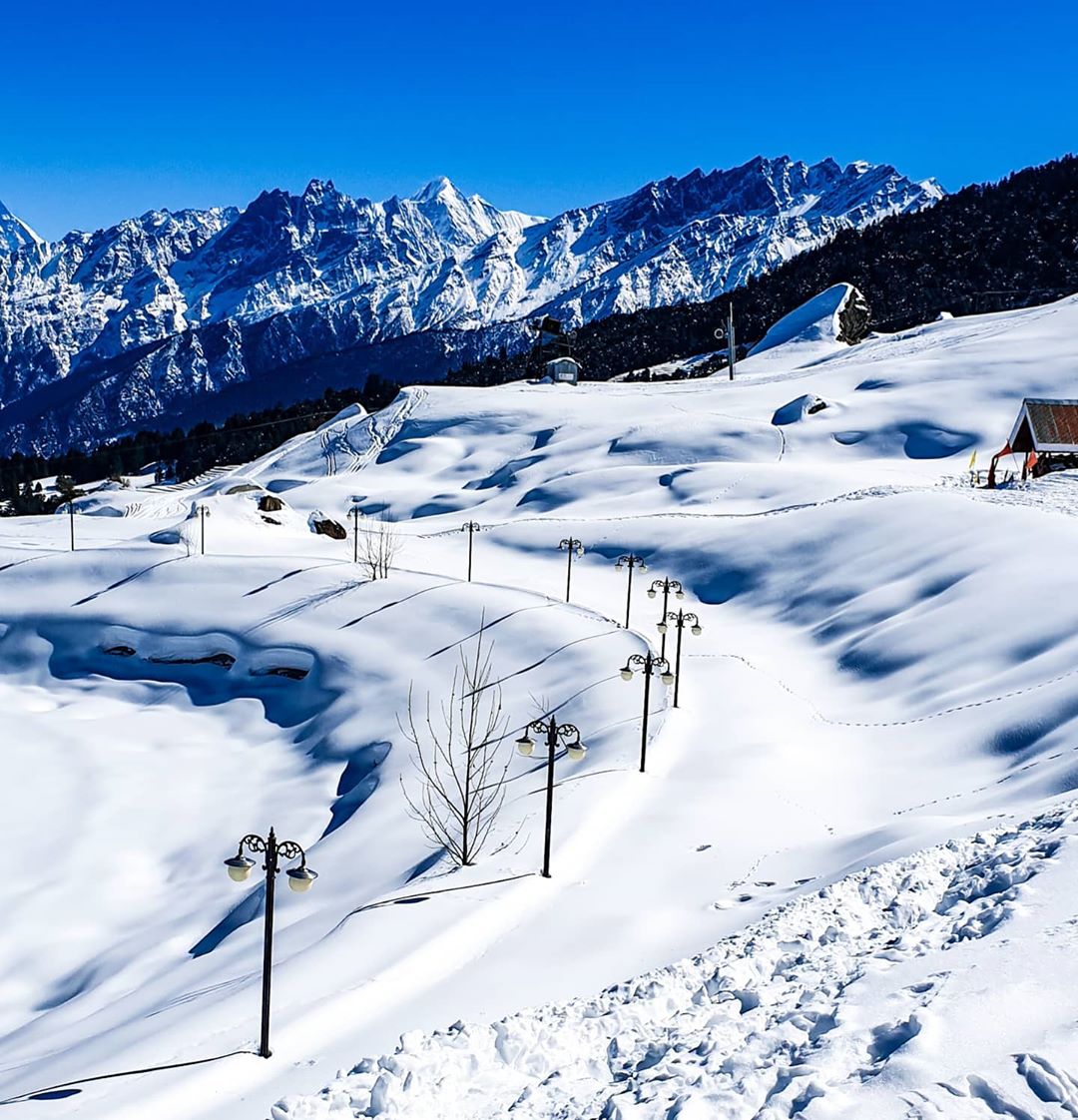
December to March is the low-hills season. Rishikesh is mild and clear, Mussoorie gets occasional snow, and Auli runs ski courses when snow allows, usually January to March. Chopta often gets snow from January, and the road above Duggalbitta may close; Tungnath is then a winter walk with microspikes and a local guide. Check current status before you travel.
Festivals and crowds through the year
Crowds in Garhwal follow the religious calendar and the school calendar more than the weather. The first week after each shrine opens is the busiest of the year, and Char Dham registration has at times been capped per day at each temple to manage the numbers. The Hindi-belt summer holidays, from late May to June, then fill Mussoorie, Rishikesh and every yatra town. Ganga Dussehra, in late May or June, brings lakhs of bathers to Haridwar and large crowds to Rishikesh.
Early March is quieter in the hills but busy in Rishikesh, where Parmarth Niketan holds its International Yoga Festival in the first week. Weekends in October and the Christmas to New Year week fill Mussoorie. The quietest high-valley weeks are usually the last two of September and the second half of October, after the monsoon and before the closing ceremonies. If you want to see a doli procession without the crowd at the shrine, wait for it at Ukhimath or Mukhba when the deities come down for winter.
What to pack by season
Layers matter more than any single heavy coat, because a day can start at 30 °C in Rishikesh and end near freezing at Badrinath. Pack for the highest place you will sleep, not the place you start.
- May–June: sun hat, sunscreen and light cottons for the plains; fleece, down jacket, cap and gloves for nights above 3,000 m.
- July–August: waterproof jacket and trousers, pack cover, quick-dry clothes, sandals for wet days and a headlamp for power cuts.
- September–October: warm down jacket, thermals and gloves for nights at the shrines; light layers for the days.
- December–March: thermals, insulated jacket, waterproof boots, microspikes for Chopta and Tungnath, and sunglasses for snow.
- All year: a refillable steel bottle, basic medicines, any prescriptions and a printed copy of your registration and bookings.
Altitude: what changes above 3,000 m
Four of Garhwal's most visited places are above 3,000 m: Kedarnath at 3,583 m, Badrinath at about 3,300 m, Yamunotri at about 3,293 m and Gangotri at about 3,100 m. Ghangaria is at 3,049 m, and Hemkund Sahib and Chandrashila top 4,000 m. Many visitors reach these heights within a day or two of leaving the plains, which is how altitude sickness happens.
Acute mountain sickness shows as headache, nausea, poor sleep, dizziness and unusual tiredness. It is common and usually mild if you slow down, but it can become serious. The yatra administration runs health screening points and medical posts on the main routes, and has advised older pilgrims and those with heart or lung conditions to get a check-up before travel. Talk to your doctor before you go, especially about any medicines for altitude.
Practical habits help most people:
- Sleep low before going high: Guptkashi or Sitapur before Kedarnath, Harsil before Gangotri, Joshimath before Badrinath.
- Walk slowly, drink water often and avoid alcohol for the first nights at height.
- A helicopter does not prevent altitude sickness; it gets you high faster, so rest on arrival.
- If symptoms get worse, go down; descent of even 500 m helps.
Prices are indicative 2026. Permits, road openings, fees and timetables change: check current status before you travel.